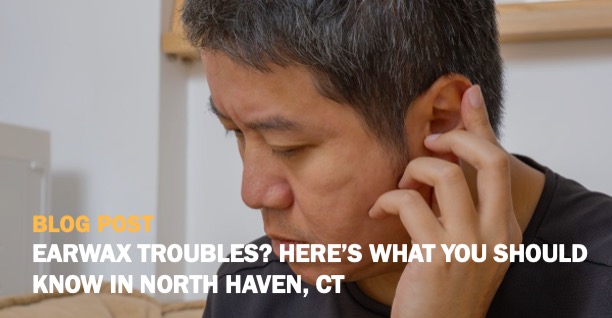
Earwax Troubles? Here’s What You Should Know in North Haven, CT
Earwax, also known as cerumen, is produced by glands in the outer third of the ear canal. While it may not be something people think about often, earwax serves an important purpose. It helps protect the ear by trapping dust and debris, lubricating the ear canal, and providing antibacterial benefits.
In most cases, the ear is self-cleaning. As you chew and move your jaw, earwax and dead skin cells slowly travel from the eardrum to the outer ear, where they dry up and fall out naturally. When this process works properly, there’s no need to clean inside your ears.

When earwax builds up and becomes trapped, it can lead to a condition known as Cerumen Impaction.
What Are the Symptoms of Earwax Blockage?
When earwax accumulates and blocks the ear canal, it can cause a variety of uncomfortable symptoms, including:
- Earache or discomfort
- A feeling of fullness or plugged hearing
- Gradual hearing loss
- Tinnitus (ringing or buzzing in the ear)
- Itching, odor, or discharge
- Coughing
- Pain or infection
These symptoms can range from mild to more bothersome and may worsen over time if the blockage is not addressed.
What Causes Cerumen Impaction?
One of the most common causes of earwax blockage is the use of objects to clean the ears. Cotton swabs, bobby pins, and even twisted tissues can push wax deeper into the ear canal instead of removing it.
The ear canal is shaped in a way that makes it easy for wax to become trapped, especially when it’s pushed inward. Over time, this can lead to a hardened blockage near the eardrum.
Other factors that may contribute include naturally narrow ear canals, excessive wax production, hearing aid use, or certain skin conditions.
Safe Treatment Options
If earwax buildup becomes problematic, there are several safe and effective treatment options available.
At-Home Remedies
Many mild cases can be managed at home by softening the wax. Options include:
- Mineral oil, baby oil, or glycerin
- Over-the-counter ear drops
- Hydrogen peroxide or carbamide peroxide solutions
These treatments help loosen the wax so it can exit the ear more easily.
Irrigation (Ear Syringing)
Ear irrigation uses water or a saline solution to gently flush softened wax out. This can be done at home with proper products or performed in a medical setting. Solutions should always be warmed to body temperature to avoid dizziness.
Important: Irrigation may not be appropriate for everyone. Avoid this method if you have:
- A perforated eardrum
- Ear tubes
- Diabetes
- Skin conditions in the ear canal
- A weakened immune system
Professional Removal
For more stubborn cases, an ENT specialist may recommend manual removal. This is performed using specialized tools, suction, and magnification to safely clear the ear canal.
This method is often preferred for patients with narrow ear canals, prior ear conditions, or when other treatments have not worked.
Why You Should Avoid Cotton Swabs
Using cotton swabs to clean your ears can do more harm than good. Instead of removing wax, they often push it deeper into the ear canal, increasing the risk of blockage.
There is also a risk of injury. Inserting objects into the ear can damage the eardrum or delicate structures inside the ear, potentially leading to pain, infection, or hearing problems.
A good rule of thumb: never put anything smaller than your elbow into your ear.
When Should You See a Doctor?
You should consider seeing an ENT specialist if:
- Symptoms persist despite home treatment
- You experience significant hearing loss
- You suspect a blockage deep in the ear
- You have a history of ear problems or eardrum perforation
If there is any chance of a perforated eardrum, avoid using drops or irrigation until evaluated by a healthcare provider.
For those prone to recurring earwax buildup or who use hearing aids, routine checkups every 6 to 12 months can help prevent future issues.
Seeking Help & Treatment
At Naugatuck Valley Ear, Nose, and Throat Associates, we provide comprehensive, patient-centered care for a wide range of ear conditions, including cerumen (earwax) impaction. While earwax plays an important role in protecting and cleaning the ear, buildup can lead to discomfort, hearing changes, or a feeling of blockage. Our experienced team will carefully evaluate your symptoms and recommend the safest, most effective treatment, always tailored to your needs.
If you or your child is experiencing ear pain, hearing loss, or signs of an ear infection, it’s important to seek care promptly. Early evaluation can help prevent complications and restore comfort. From routine earwax removal to diagnosing and treating more complex ear conditions, Naugatuck Valley ENT delivers care with professionalism and attention to detail.
📞 Contact us at 203.578.4630 to schedule an appointment today.
 https://naugatuckvalleyent.com/wp-content/uploads/2026/04/Earwax-Cerumen-Impaction-Blog-Post.jpg
318
612
Naugatuck Valley Ear, Nose & Throat Associates
https://naugatuckvalleyent.com/wp-content/uploads/2022/03/NVENTA-Logo-Tall.jpg
Naugatuck Valley Ear, Nose & Throat Associates2026-04-22 16:31:112026-05-18 15:27:16Earwax Troubles? Here’s What You Should Know in North Haven, CT
https://naugatuckvalleyent.com/wp-content/uploads/2026/04/Earwax-Cerumen-Impaction-Blog-Post.jpg
318
612
Naugatuck Valley Ear, Nose & Throat Associates
https://naugatuckvalleyent.com/wp-content/uploads/2022/03/NVENTA-Logo-Tall.jpg
Naugatuck Valley Ear, Nose & Throat Associates2026-04-22 16:31:112026-05-18 15:27:16Earwax Troubles? Here’s What You Should Know in North Haven, CT https://naugatuckvalleyent.com/wp-content/uploads/2026/04/The-Evolution-of-ENT-Care-Blog-Post-Rectangle.jpg
318
612
Naugatuck Valley Ear, Nose & Throat Associates
https://naugatuckvalleyent.com/wp-content/uploads/2022/03/NVENTA-Logo-Tall.jpg
Naugatuck Valley Ear, Nose & Throat Associates2026-04-08 16:11:182026-04-17 14:40:02The Evolution of ENT Care | Then and Now in Southington, CT
https://naugatuckvalleyent.com/wp-content/uploads/2026/04/The-Evolution-of-ENT-Care-Blog-Post-Rectangle.jpg
318
612
Naugatuck Valley Ear, Nose & Throat Associates
https://naugatuckvalleyent.com/wp-content/uploads/2022/03/NVENTA-Logo-Tall.jpg
Naugatuck Valley Ear, Nose & Throat Associates2026-04-08 16:11:182026-04-17 14:40:02The Evolution of ENT Care | Then and Now in Southington, CT https://naugatuckvalleyent.com/wp-content/uploads/2026/03/TemporoMandibularJoint-TMJ-Blog-Post.jpg
318
612
Naugatuck Valley Ear, Nose & Throat Associates
https://naugatuckvalleyent.com/wp-content/uploads/2022/03/NVENTA-Logo-Tall.jpg
Naugatuck Valley Ear, Nose & Throat Associates2026-03-24 19:35:072026-03-24 19:38:51From Tension to Relief | What You Need to Know About TMJ, in Meriden, CT
https://naugatuckvalleyent.com/wp-content/uploads/2026/03/TemporoMandibularJoint-TMJ-Blog-Post.jpg
318
612
Naugatuck Valley Ear, Nose & Throat Associates
https://naugatuckvalleyent.com/wp-content/uploads/2022/03/NVENTA-Logo-Tall.jpg
Naugatuck Valley Ear, Nose & Throat Associates2026-03-24 19:35:072026-03-24 19:38:51From Tension to Relief | What You Need to Know About TMJ, in Meriden, CT https://naugatuckvalleyent.com/wp-content/uploads/2026/02/Ear-Cleaning-Blog-Post.jpg
318
612
Naugatuck Valley Ear, Nose & Throat Associates
https://naugatuckvalleyent.com/wp-content/uploads/2022/03/NVENTA-Logo-Tall.jpg
Naugatuck Valley Ear, Nose & Throat Associates2026-02-04 23:22:102026-03-11 14:17:48Ear Cleaning | The Safe Way to Care for Your Ears in Woodbury, CT
https://naugatuckvalleyent.com/wp-content/uploads/2026/02/Ear-Cleaning-Blog-Post.jpg
318
612
Naugatuck Valley Ear, Nose & Throat Associates
https://naugatuckvalleyent.com/wp-content/uploads/2022/03/NVENTA-Logo-Tall.jpg
Naugatuck Valley Ear, Nose & Throat Associates2026-02-04 23:22:102026-03-11 14:17:48Ear Cleaning | The Safe Way to Care for Your Ears in Woodbury, CT https://naugatuckvalleyent.com/wp-content/uploads/2026/01/Travel-Tips-for-Health-ENT-Blog-.jpg
321
612
Naugatuck Valley Ear, Nose & Throat Associates
https://naugatuckvalleyent.com/wp-content/uploads/2022/03/NVENTA-Logo-Tall.jpg
Naugatuck Valley Ear, Nose & Throat Associates2026-01-20 19:27:152026-01-20 19:27:42Travel Tips for Healthy Ears, Nose, and Throat | What Every Traveler Should Know in Plymouth, CT
https://naugatuckvalleyent.com/wp-content/uploads/2026/01/Travel-Tips-for-Health-ENT-Blog-.jpg
321
612
Naugatuck Valley Ear, Nose & Throat Associates
https://naugatuckvalleyent.com/wp-content/uploads/2022/03/NVENTA-Logo-Tall.jpg
Naugatuck Valley Ear, Nose & Throat Associates2026-01-20 19:27:152026-01-20 19:27:42Travel Tips for Healthy Ears, Nose, and Throat | What Every Traveler Should Know in Plymouth, CT https://naugatuckvalleyent.com/wp-content/uploads/2025/11/Doctor-Visit-Anxiety-Blog-Post-Rectangle.jpg
321
612
Naugatuck Valley Ear, Nose & Throat Associates
https://naugatuckvalleyent.com/wp-content/uploads/2022/03/NVENTA-Logo-Tall.jpg
Naugatuck Valley Ear, Nose & Throat Associates2025-08-29 16:58:262025-11-17 17:57:05Easing Doctor Visit Anxiety in Kids in Thomaston, CT
https://naugatuckvalleyent.com/wp-content/uploads/2025/11/Doctor-Visit-Anxiety-Blog-Post-Rectangle.jpg
321
612
Naugatuck Valley Ear, Nose & Throat Associates
https://naugatuckvalleyent.com/wp-content/uploads/2022/03/NVENTA-Logo-Tall.jpg
Naugatuck Valley Ear, Nose & Throat Associates2025-08-29 16:58:262025-11-17 17:57:05Easing Doctor Visit Anxiety in Kids in Thomaston, CT https://naugatuckvalleyent.com/wp-content/uploads/2025/11/Ear-Candling-Blog-Post-Rectangle.jpg
321
612
Naugatuck Valley Ear, Nose & Throat Associates
https://naugatuckvalleyent.com/wp-content/uploads/2022/03/NVENTA-Logo-Tall.jpg
Naugatuck Valley Ear, Nose & Throat Associates2025-07-31 16:16:402025-11-17 17:55:12Ear Candling | Wellness Trend or Wax Trap in Middlebury, CT
https://naugatuckvalleyent.com/wp-content/uploads/2025/11/Ear-Candling-Blog-Post-Rectangle.jpg
321
612
Naugatuck Valley Ear, Nose & Throat Associates
https://naugatuckvalleyent.com/wp-content/uploads/2022/03/NVENTA-Logo-Tall.jpg
Naugatuck Valley Ear, Nose & Throat Associates2025-07-31 16:16:402025-11-17 17:55:12Ear Candling | Wellness Trend or Wax Trap in Middlebury, CT https://naugatuckvalleyent.com/wp-content/uploads/2025/05/Noise-Damage-Blog-Post-Rectangle.jpg
471
900
Naugatuck Valley Ear, Nose & Throat Associates
https://naugatuckvalleyent.com/wp-content/uploads/2022/03/NVENTA-Logo-Tall.jpg
Naugatuck Valley Ear, Nose & Throat Associates2025-06-10 18:54:322026-03-30 19:51:20Noise Damage | The Hidden Dangers of Everyday Noises in Oxford, CT
https://naugatuckvalleyent.com/wp-content/uploads/2025/05/Noise-Damage-Blog-Post-Rectangle.jpg
471
900
Naugatuck Valley Ear, Nose & Throat Associates
https://naugatuckvalleyent.com/wp-content/uploads/2022/03/NVENTA-Logo-Tall.jpg
Naugatuck Valley Ear, Nose & Throat Associates2025-06-10 18:54:322026-03-30 19:51:20Noise Damage | The Hidden Dangers of Everyday Noises in Oxford, CT https://naugatuckvalleyent.com/wp-content/uploads/2025/04/Sense-of-Smell-Blog-Post-Rectangle.jpg
321
612
Naugatuck Valley Ear, Nose & Throat Associates
https://naugatuckvalleyent.com/wp-content/uploads/2022/03/NVENTA-Logo-Tall.jpg
Naugatuck Valley Ear, Nose & Throat Associates2025-04-22 15:58:072025-11-17 20:04:06Sense of Smell | The Science of Smell and How Your Nose Shapes Your World in Waterbury, CT
https://naugatuckvalleyent.com/wp-content/uploads/2025/04/Sense-of-Smell-Blog-Post-Rectangle.jpg
321
612
Naugatuck Valley Ear, Nose & Throat Associates
https://naugatuckvalleyent.com/wp-content/uploads/2022/03/NVENTA-Logo-Tall.jpg
Naugatuck Valley Ear, Nose & Throat Associates2025-04-22 15:58:072025-11-17 20:04:06Sense of Smell | The Science of Smell and How Your Nose Shapes Your World in Waterbury, CT https://naugatuckvalleyent.com/wp-content/uploads/2025/03/Listen-to-Your-Ears-Nose-Throat-Blog-Post-Rectangle.jpg
321
612
Naugatuck Valley Ear, Nose & Throat Associates
https://naugatuckvalleyent.com/wp-content/uploads/2022/03/NVENTA-Logo-Tall.jpg
Naugatuck Valley Ear, Nose & Throat Associates2025-03-31 14:50:112025-11-17 19:51:58Listen to Your Ears, Nose and Throat | 10 Signs You Should See an ENT in Waterbury, CT
https://naugatuckvalleyent.com/wp-content/uploads/2025/03/Listen-to-Your-Ears-Nose-Throat-Blog-Post-Rectangle.jpg
321
612
Naugatuck Valley Ear, Nose & Throat Associates
https://naugatuckvalleyent.com/wp-content/uploads/2022/03/NVENTA-Logo-Tall.jpg
Naugatuck Valley Ear, Nose & Throat Associates2025-03-31 14:50:112025-11-17 19:51:58Listen to Your Ears, Nose and Throat | 10 Signs You Should See an ENT in Waterbury, CT https://naugatuckvalleyent.com/wp-content/uploads/2025/11/Recognize-and-Treat-Dehydration-Blog-Post-Rectangle.jpg
321
612
Naugatuck Valley Ear, Nose & Throat Associates
https://naugatuckvalleyent.com/wp-content/uploads/2022/03/NVENTA-Logo-Tall.jpg
Naugatuck Valley Ear, Nose & Throat Associates2025-02-28 14:56:452025-11-17 18:03:34How to Recognize and Treat Dehydration in Winter in Derby, CT
https://naugatuckvalleyent.com/wp-content/uploads/2025/11/Recognize-and-Treat-Dehydration-Blog-Post-Rectangle.jpg
321
612
Naugatuck Valley Ear, Nose & Throat Associates
https://naugatuckvalleyent.com/wp-content/uploads/2022/03/NVENTA-Logo-Tall.jpg
Naugatuck Valley Ear, Nose & Throat Associates2025-02-28 14:56:452025-11-17 18:03:34How to Recognize and Treat Dehydration in Winter in Derby, CT https://naugatuckvalleyent.com/wp-content/uploads/2025/11/Living-with-Hyperacusis-hearing-Blog-Post-Rectangle.jpg
321
612
Naugatuck Valley Ear, Nose & Throat Associates
https://naugatuckvalleyent.com/wp-content/uploads/2022/03/NVENTA-Logo-Tall.jpg
Naugatuck Valley Ear, Nose & Throat Associates2025-02-19 15:01:022025-11-17 18:06:09Living with Hyperacusis: Understanding and Managing Sensitive Hearing in Plymouth, CT
https://naugatuckvalleyent.com/wp-content/uploads/2025/11/Living-with-Hyperacusis-hearing-Blog-Post-Rectangle.jpg
321
612
Naugatuck Valley Ear, Nose & Throat Associates
https://naugatuckvalleyent.com/wp-content/uploads/2022/03/NVENTA-Logo-Tall.jpg
Naugatuck Valley Ear, Nose & Throat Associates2025-02-19 15:01:022025-11-17 18:06:09Living with Hyperacusis: Understanding and Managing Sensitive Hearing in Plymouth, CT https://naugatuckvalleyent.com/wp-content/uploads/2025/11/Earwax-Sticky-Truth-Blog-Post-Rectangle.jpg
321
612
Naugatuck Valley Ear, Nose & Throat Associates
https://naugatuckvalleyent.com/wp-content/uploads/2022/03/NVENTA-Logo-Tall.jpg
Naugatuck Valley Ear, Nose & Throat Associates2024-12-05 17:54:182025-11-17 19:12:02The Sticky Truth About Earwax in Ansonia, CT | When to Clean, When to Leave It Alone, and When to See a Doctor
https://naugatuckvalleyent.com/wp-content/uploads/2025/11/Earwax-Sticky-Truth-Blog-Post-Rectangle.jpg
321
612
Naugatuck Valley Ear, Nose & Throat Associates
https://naugatuckvalleyent.com/wp-content/uploads/2022/03/NVENTA-Logo-Tall.jpg
Naugatuck Valley Ear, Nose & Throat Associates2024-12-05 17:54:182025-11-17 19:12:02The Sticky Truth About Earwax in Ansonia, CT | When to Clean, When to Leave It Alone, and When to See a Doctor https://naugatuckvalleyent.com/wp-content/uploads/2025/11/Protecting-Your-Ears-Barotrauma-Blog-Post-Rectangle.jpg
321
612
Naugatuck Valley Ear, Nose & Throat Associates
https://naugatuckvalleyent.com/wp-content/uploads/2022/03/NVENTA-Logo-Tall.jpg
Naugatuck Valley Ear, Nose & Throat Associates2024-11-26 15:29:012025-11-17 19:02:28Protecting Your Ears at Altitude from Barotrauma: Tips for Air Travel and Diving in Middlebury, CT
https://naugatuckvalleyent.com/wp-content/uploads/2025/11/Protecting-Your-Ears-Barotrauma-Blog-Post-Rectangle.jpg
321
612
Naugatuck Valley Ear, Nose & Throat Associates
https://naugatuckvalleyent.com/wp-content/uploads/2022/03/NVENTA-Logo-Tall.jpg
Naugatuck Valley Ear, Nose & Throat Associates2024-11-26 15:29:012025-11-17 19:02:28Protecting Your Ears at Altitude from Barotrauma: Tips for Air Travel and Diving in Middlebury, CT https://naugatuckvalleyent.com/wp-content/uploads/2025/11/Behind-the-Eardrum-CHOLESTEATOMA-Blog-Post-Rectangle.jpg
321
612
Naugatuck Valley Ear, Nose & Throat Associates
https://naugatuckvalleyent.com/wp-content/uploads/2022/03/NVENTA-Logo-Tall.jpg
Naugatuck Valley Ear, Nose & Throat Associates2024-09-06 17:55:122025-11-17 17:52:24Behind the Eardrum: Navigating Cholesteatoma in Southbury, CT
https://naugatuckvalleyent.com/wp-content/uploads/2025/11/Behind-the-Eardrum-CHOLESTEATOMA-Blog-Post-Rectangle.jpg
321
612
Naugatuck Valley Ear, Nose & Throat Associates
https://naugatuckvalleyent.com/wp-content/uploads/2022/03/NVENTA-Logo-Tall.jpg
Naugatuck Valley Ear, Nose & Throat Associates2024-09-06 17:55:122025-11-17 17:52:24Behind the Eardrum: Navigating Cholesteatoma in Southbury, CT https://naugatuckvalleyent.com/wp-content/uploads/2024/07/Tinnitus-The-Ringing-Truth-Blog-Post-Rectangle.jpg
321
612
Naugatuck Valley Ear, Nose & Throat Associates
https://naugatuckvalleyent.com/wp-content/uploads/2022/03/NVENTA-Logo-Tall.jpg
Naugatuck Valley Ear, Nose & Throat Associates2024-07-23 22:14:512025-11-17 20:10:10The Ringing Truth: Exploring Tinnitus in Shelton, CT
https://naugatuckvalleyent.com/wp-content/uploads/2024/07/Tinnitus-The-Ringing-Truth-Blog-Post-Rectangle.jpg
321
612
Naugatuck Valley Ear, Nose & Throat Associates
https://naugatuckvalleyent.com/wp-content/uploads/2022/03/NVENTA-Logo-Tall.jpg
Naugatuck Valley Ear, Nose & Throat Associates2024-07-23 22:14:512025-11-17 20:10:10The Ringing Truth: Exploring Tinnitus in Shelton, CT https://naugatuckvalleyent.com/wp-content/uploads/2023/05/Swimmers-Ear-Blog-Post-Rectangle.jpg
321
612
Naugatuck Valley Ear, Nose & Throat Associates
https://naugatuckvalleyent.com/wp-content/uploads/2022/03/NVENTA-Logo-Tall.jpg
Naugatuck Valley Ear, Nose & Throat Associates2024-06-30 16:07:362025-11-17 20:06:23Swimmer’s Ear (Otitis Externa) Explained: Causes and Treatments in Ansonia, CT
https://naugatuckvalleyent.com/wp-content/uploads/2023/05/Swimmers-Ear-Blog-Post-Rectangle.jpg
321
612
Naugatuck Valley Ear, Nose & Throat Associates
https://naugatuckvalleyent.com/wp-content/uploads/2022/03/NVENTA-Logo-Tall.jpg
Naugatuck Valley Ear, Nose & Throat Associates2024-06-30 16:07:362025-11-17 20:06:23Swimmer’s Ear (Otitis Externa) Explained: Causes and Treatments in Ansonia, CT https://naugatuckvalleyent.com/wp-content/uploads/2023/05/Navigating-treatments-for-Sensorineural-Hearing-Loss-Blog-Post-Rectangle.jpg
321
612
Naugatuck Valley Ear, Nose & Throat Associates
https://naugatuckvalleyent.com/wp-content/uploads/2022/03/NVENTA-Logo-Tall.jpg
Naugatuck Valley Ear, Nose & Throat Associates2024-06-05 16:51:302025-11-17 19:53:42Navigating Treatments for Sensorineural Hearing Loss in Prospect, CT
https://naugatuckvalleyent.com/wp-content/uploads/2023/05/Navigating-treatments-for-Sensorineural-Hearing-Loss-Blog-Post-Rectangle.jpg
321
612
Naugatuck Valley Ear, Nose & Throat Associates
https://naugatuckvalleyent.com/wp-content/uploads/2022/03/NVENTA-Logo-Tall.jpg
Naugatuck Valley Ear, Nose & Throat Associates2024-06-05 16:51:302025-11-17 19:53:42Navigating Treatments for Sensorineural Hearing Loss in Prospect, CT https://naugatuckvalleyent.com/wp-content/uploads/2023/05/Hearing-Loss-Understanding-Blog-Post-Rectangle.jpg
321
612
Naugatuck Valley Ear, Nose, and Throat Associates (NVENTA)
https://naugatuckvalleyent.com/wp-content/uploads/2022/03/NVENTA-Logo-Tall.jpg
Naugatuck Valley Ear, Nose, and Throat Associates (NVENTA)2023-06-30 01:35:152025-11-17 19:47:46Hearing Loss: Understanding and Addressing Hearing Issues in Bristol, CT
https://naugatuckvalleyent.com/wp-content/uploads/2023/05/Hearing-Loss-Understanding-Blog-Post-Rectangle.jpg
321
612
Naugatuck Valley Ear, Nose, and Throat Associates (NVENTA)
https://naugatuckvalleyent.com/wp-content/uploads/2022/03/NVENTA-Logo-Tall.jpg
Naugatuck Valley Ear, Nose, and Throat Associates (NVENTA)2023-06-30 01:35:152025-11-17 19:47:46Hearing Loss: Understanding and Addressing Hearing Issues in Bristol, CT https://naugatuckvalleyent.com/wp-content/uploads/2022/03/Ear-Infections-in-Children.jpg
628
1200
Naugatuck Valley Ear, Nose, and Throat Associates (NVENTA)
https://naugatuckvalleyent.com/wp-content/uploads/2022/03/NVENTA-Logo-Tall.jpg
Naugatuck Valley Ear, Nose, and Throat Associates (NVENTA)2022-03-01 18:58:442025-11-17 17:56:15Ear Infections in Children
https://naugatuckvalleyent.com/wp-content/uploads/2022/03/Ear-Infections-in-Children.jpg
628
1200
Naugatuck Valley Ear, Nose, and Throat Associates (NVENTA)
https://naugatuckvalleyent.com/wp-content/uploads/2022/03/NVENTA-Logo-Tall.jpg
Naugatuck Valley Ear, Nose, and Throat Associates (NVENTA)2022-03-01 18:58:442025-11-17 17:56:15Ear Infections in ChildrenHow We Can Help

Our ear condition specialists can help determine which issues are causing your discomfort and develop a treatment plan that will help make life more enjoyable. Our board-certified doctors, dedicated nursing staff, and highly trained ENT specialists will strive to make your ear condition treatment experience positive and productive. Please contact Naugatuck Valley ENT at 203.578.4630 to set up an appointment.